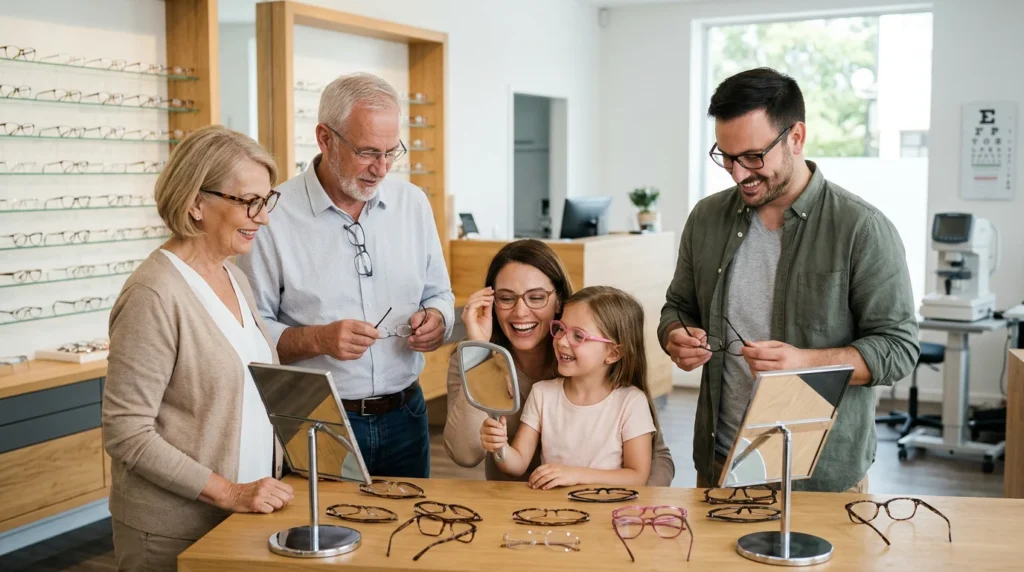
Quick answer: You can get eyeglasses for the entire family at an optical shop that can handle kid-friendly fittings, adult prescriptions, and specialty needs like progressives, computer lenses, and safety frames. Look for a place that offers on-site adjustments, a wide range of frame sizes, lens options with clear explanations, and help coordinating vision insurance for multiple family members.
What “Family Eyeglasses” Really Means
Getting glasses for everyone in one stop usually means more than picking frames off a wall. A true family-friendly optical setup can fit tiny bridges and growing faces, handle adult progressives, and still have practical options for sports, work, and screen time. You also want an optician who can explain lens choices in plain language and make adjustments on the spot as prescriptions and comfort needs vary from person to person.
If you’re searching specifically for Eyeglasses for the entire family, focus on convenience plus follow-up care. Glasses rarely fit perfectly on day one. Being able to come back for quick tweaks—nose pads, temple length, frame alignment—can be the difference between “fine” and “actually comfortable.”
It also helps when one location can coordinate different prescriptions and lens types at the same time, so you’re not repeating the same decisions and paperwork for each family member.
How to Choose Frames and Lenses for Kids, Teens, and Adults
For kids, fit and durability matter more than style trends. Frames should sit close to the face without touching cheeks, and the eyes should be centered in the lenses. Spring hinges can help with rough handling, and lightweight materials are often more comfortable for smaller noses and ears. Ask about impact-resistant lens materials for active children, and consider a strap or sports-goggle style for certain activities.
Teens often care most about appearance, but they also tend to wear glasses hard—backpacks, sports, and long school days. A good approach is to pick a frame they like, then confirm it’s stable: no sliding when looking down, no pinching at the temples, and enough lens height if their prescription is stronger.
For adults, lens design is usually the bigger decision. Single-vision works for one distance, while progressives blend near-to-far without visible lines. If you spend hours on a laptop, ask about computer-focused options or anti-reflective coatings that can reduce glare from overhead lights and screens. The best choice is the one that matches how you actually use your eyes all day.
Quick Decision Table: What to Ask For and What to Check at Pickup
Use this as a simple starting point when you’re comparing options. An optician can refine it based on the prescription strength, frame choice, and how each person actually uses their glasses.
Kids — Use-cases: playground/sports, frequent drops. Lens/material options to ask about: impact-resistant lens materials; durable frame materials; straps or sports-goggle styles for certain activities. Pickup checks to request: eyes centered in the lenses; frame doesn’t touch cheeks; temples don’t pinch; glasses stay put when looking down and shaking head gently.
Teens — Use-cases: school screens, sports, style-focused daily wear. Lens/material options to ask about: anti-reflective coating for classroom/screen glare; impact-resistant options for sports; consider a second “sports pair” if needed. Pickup checks to request: no sliding with backpack on/off; comfortable behind ears; adequate lens height and stable fit for stronger prescriptions; clear vision in typical head posture.
Adults — Use-cases: driving, office/computer, reading, all-day wear. Lens/material options to ask about: progressives for near-to-far; single-vision computer/near options if you’re at a screen for long hours; anti-reflective coating for night glare; thinner/lighter lens materials for stronger prescriptions. Pickup checks to request: pupil/optical center alignment; progressive corridor feels natural when looking down to read; no “swim” when walking; frame sits level (not tilted) and doesn’t leave deep pressure marks.
What to Do Next
Bring everyone’s current prescription (or have it sent over), plus the glasses they wear now so the optician can see what already works and what doesn’t. Write down each family member’s top needs before you go—sports, screen time, safety requirements at work, driving at night, reading, or headaches—so the lens recommendation matches real life.
Ask for PD (pupillary distance) measurements for each person and confirm the optical centers will be set for the chosen frame. At pickup, do a quick “real world” test in the shop: look across the room, read a phone, look down like you’re walking stairs, and turn your head like you’re checking a side mirror.
If discomfort, headaches, or unstable fit continue after a short break-in period, schedule an adjustment within about 7–14 days as a general guideline. Small frame tweaks can solve most comfort issues, and persistent blur or dizziness should trigger a prescription/measurement re-check.
If you’re looking for a local place to ask these questions in person, Georgia Eye is one option to contact.