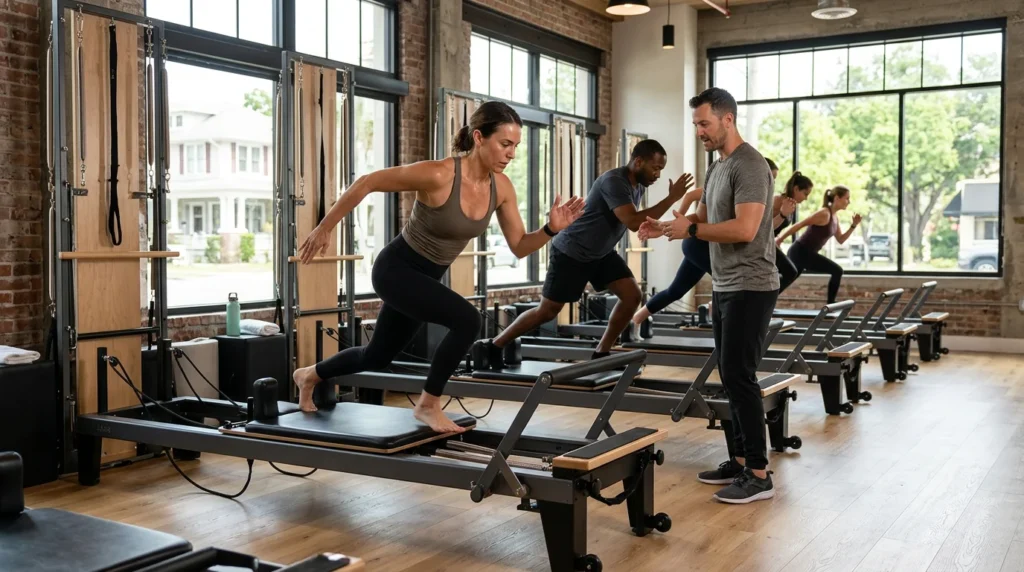
Quick answer: Beginner-friendly reformer cardio in South Tampa is easiest to find at studios that offer a dedicated jumpboard (cardio) class, clear level options, and coaching that prioritizes form over speed. Look for small class sizes, an intro pathway, and instructors who explain spring settings and foot placement. You should leave feeling worked, not wrecked—especially in your knees, hips, or low back.
What “Reformer Cardio” Usually Means
Most people mean a reformer class that uses a jumpboard: you’re lying down, feet on a padded platform, and “jumping” against spring resistance. It feels like a mix of Pilates control and interval training, with less impact than running because your back is supported and you’re not landing on the floor.
If you’re searching for reformer cardio south Tampa, confirm the class description mentions jumpboard work, cardio intervals, or athletic conditioning on the reformer. A standard reformer flow can still get your heart rate up, but jumpboard classes are the most reliably “cardio” in the way people expect.
Beginner-friendly doesn’t mean easy. It means the instructor gives options for spring tension, range of motion, and pace so you can build coordination and endurance without your form falling apart.
How To Tell If A Class Is Truly Beginner-Friendly
A good beginner setup starts before you even jump. You’ll typically get quick coaching on neutral spine, rib position, and how to keep your pelvis steady while your legs move. That’s the difference between feeling your glutes and feeling your hip flexors take over.
Ask (or look for) signs that the studio welcomes first-timers: an intro class, level labels that actually mean something, and cues for common trouble spots like knee tracking (knees in line with the second and third toes) and ankle alignment (not sickling in or rolling out).
Also pay attention to pacing. A beginner-friendly class usually builds from slower, controlled jumps to faster intervals, and it includes short resets so you can re-find alignment. If the class starts at full speed and stays there, it’s more “advanced cardio” than “beginner-friendly.”
What You Should Feel After Class (And Red Flags To Watch)
Normal after a first jumpboard session: elevated heart rate during intervals, glutes and hamstrings working, calves a bit toasted, and core fatigue from staying stable. Mild muscle soreness the next day is common if you’re new to reformer work.
Red flags: sharp knee pain, pinching in the front of the hips, low-back gripping, or numbness/tingling. Those usually point to spring settings that are too light or too heavy, feet placed too high/low on the board, or losing pelvic stability as fatigue sets in. A coach should be able to adjust your springs, reduce jump height, or swap in non-jumping conditioning when needed.
If you have a history of knee, hip, or back issues, mention it before class. Many people can still do reformer cardio with smart modifications, but you want an instructor who treats pain as a stop sign, not something to push through.
What To Ask Before You Book In South Tampa
Two quick questions can save you a lot of guesswork: “Is this class appropriate for my first jumpboard session?” and “Do you offer options for intensity and spring settings?” You can also ask how much time is spent jumping versus strength work on the reformer, since formats vary.
Practical details matter too. Ask what shoes are allowed (many studios prefer grippy socks), whether you need to arrive early for setup, and if there’s a recommended class to take first so you understand the reformer equipment.
If you want help choosing the right level and getting comfortable with jumpboard form, Pilates Bubblebarr can point you to a class that matches your goals and current fitness.