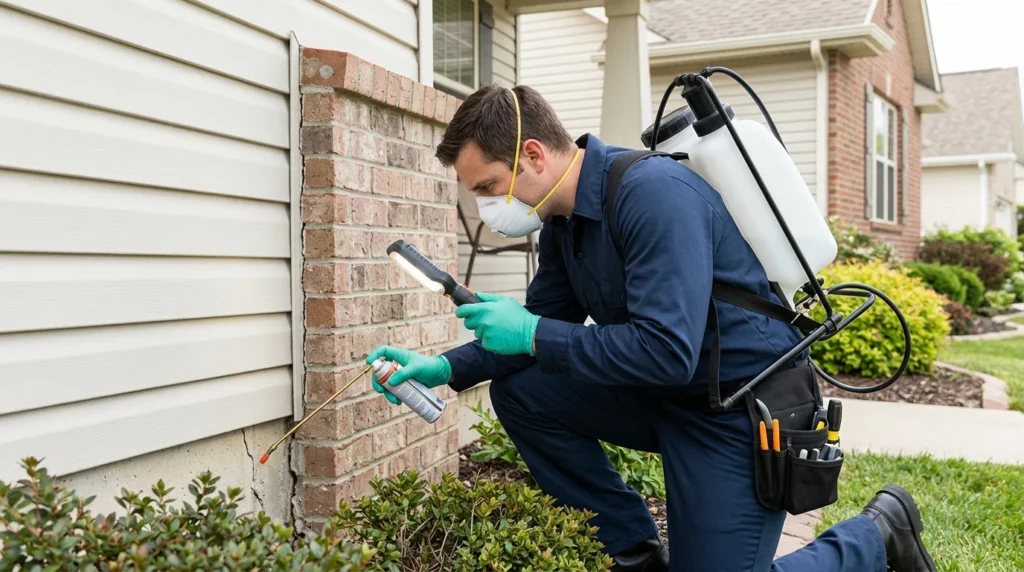
Quick answer: Pest control services for many Athens-area homes include an inspection to confirm the pest and entry points, a targeted treatment plan (baits, crack-and-crevice products, dusts, or exterior perimeter work), and follow-up if activity persists. Many providers also give prevention guidance around moisture, food storage, and sealing gaps. What’s included and how many visits it takes varies by pest, access, and how long the problem has been active.
What A Standard Visit Looks Like
A normal appointment starts with a quick but methodical inspection: where you’re seeing activity, what kind of droppings or damage is present, and how pests are getting in. A good technician will check common hot spots like kitchens and baths, around plumbing penetrations, door thresholds, attic access points, and the foundation line.
After that, treatment is usually targeted rather than “spray everything.” For ants and roaches, that often means gel baits, crack-and-crevice applications, and placing monitors. For spiders and general crawling insects, an exterior perimeter treatment is common, focusing on eaves, windows, and entry points. If you’re calling for pest control services, ask what the plan is for your specific pest and what you should do before and after the visit (for example, keeping pets away until treated areas are dry).
Many services include a follow-up visit if activity continues, because some pests take time to knock down. Many companies quote 1–3 visits for some infestations, but results vary by the pest involved, sanitation and clutter levels, moisture issues, and whether entry points can be accessed and sealed.
Athens-Specific Scenarios and What To Do Before and After
Summer ants around kitchens and patios: Before service, wipe up crumbs/grease, empty recycling, and note where trails start (window, back door, dishwasher). After service, avoid washing treated baseboards/edges for the time the technician recommends, and keep food sealed so baits stay more attractive than your pantry.
German roaches in kitchens and bathrooms: Before service, clear under-sink and behind-appliance areas so cracks and plumbing voids are reachable; fix obvious leaks if you can. After service, don’t use aerosol “bug bombs” or strong cleaners on bait placements, and reduce nighttime food sources (dirty dishes, pet bowls left out), because those can compete with baits.
Fall occasional invaders (stink bugs, lady beetles, boxelder bugs): Before service, identify where they’re gathering (sunny siding, attic windows, around lights). After service, focus on exclusion: replace worn door sweeps, seal gaps around windows/utility lines, and vacuum invaders indoors instead of crushing them (some can stain or smell).
Spiders and webbing around eaves/porches: Before service, knock down heavy webs if you’re comfortable doing so and trim vegetation off siding to improve access. After service, reduce night-time insect attraction by turning off unnecessary exterior lights or switching to less-attractive bulbs, and keep mulch/leaf litter pulled back from the foundation line.
Moisture-driven pests (silverfish, drain flies, some ants): Before service, make a list of damp areas (bath fan not working, slow drains, crawlspace humidity). After service, run exhaust fans, repair leaks, and keep storage off floors in damp rooms, because moisture control is often what makes treatments “stick.”
DIY vs Pro: A Quick Decision Guide
DIY is often reasonable for a small, clearly identified problem you’re seeing occasionally: a few ants with an obvious trail, a couple of spiders, or a one-off wasp on the porch. Stick to low-risk steps first—sanitation, sealing gaps, fixing moisture, and using store baits exactly as labeled.
Call a pro promptly if you suspect termites (mud tubes, hollow-sounding wood, swarming), you’re seeing recurring German roaches despite baiting and cleaning, you have rodents (droppings, gnawing, noises in walls/attic), or you suspect bed bugs (bites plus spotting on mattress seams). These problems often require inspection tools, product access, and an exclusion plan that’s hard to replicate with retail products.
When booking, have details ready: where you’re seeing activity (room and exact spot), time of day, photos if possible, whether you’ve used any sprays/foggers recently, whether there are pets/aquariums, and any access constraints (crawlspace, locked gates, attic pull-down). That information helps a company choose the right approach instead of guessing.
How to Tell if the Plan Is Working
Some activity right after treatment can be normal, especially with ants and roaches, because pests may move through treated areas before dying. You should see a steady decline over days to a couple of weeks, not a new pattern of sightings in new rooms.
Keep notes: where you saw pests, time of day, and what you were doing (cooking, showering, turning on lights). That helps pinpoint moisture, food sources, or entry points. If you’re still seeing consistent activity after the follow-up window your provider described, ask for a reinspection and a refreshed plan rather than repeating the exact same treatment.
If you want help, call a licensed local pest control company and ask what pests are covered, what follow-ups look like, and what prep they recommend for your specific situation.