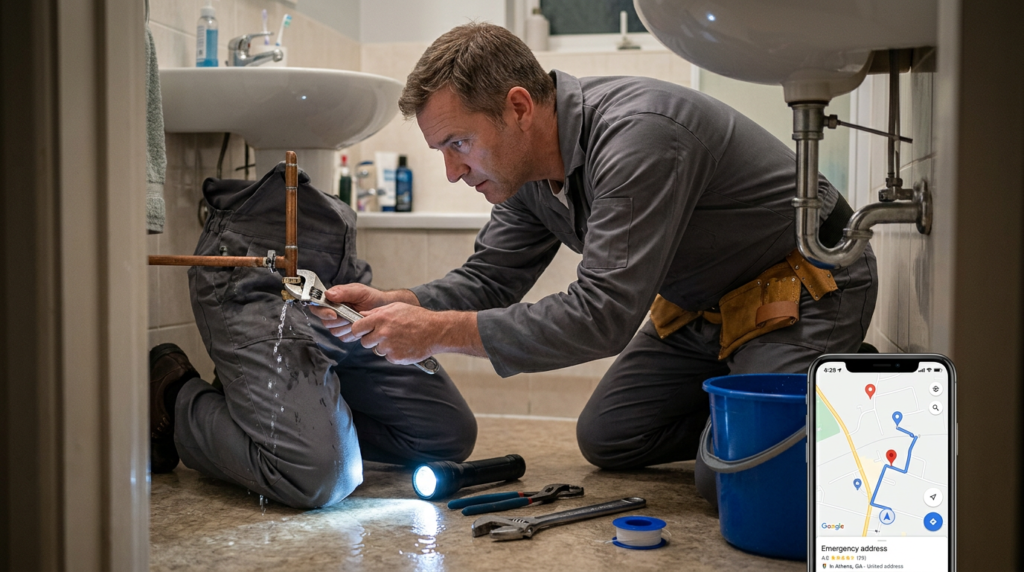
Quick answer: Call an emergency plumber when water is actively leaking or flooding, sewage is backing up, there’s no water in the home, or you smell gas near a water heater or appliance connection. Also treat burst pipes, overflowing toilets you can’t stop, and water-heater leaks as urgent. If shutting off a valve doesn’t stop the problem, or water is near electrical outlets, get help immediately.
Situations That Are Truly Plumbing Emergencies
If water is spreading beyond a sink, tub, or toilet, treat it as an emergency. Burst or frozen pipes, a supply line that won’t stop spraying, and a water heater that’s leaking from the tank can cause fast damage to floors, cabinets, and drywall. Sewage backup is also urgent because it can contaminate living areas and make the home unsafe.
Some problems start small but turn dangerous quickly. A toilet that keeps overflowing after you shut the stop valve, a main drain blockage that causes multiple fixtures to back up, or water pooling near outlets and appliances all deserve a call to an emergency plumber Athens GA right away. If you smell gas around a water heater or suspect a gas leak, leave the area and contact the gas utility first, then a plumber for repairs once it’s safe.
Lack of running water can also be an emergency if it affects sanitation or indicates a major leak. If your neighbors have water but you don’t, or your meter is spinning with all fixtures off, assume something is wrong and act quickly.
What To Do While You Wait for Help
Your first goal is to stop or slow the water. Shut off the nearest fixture valve if the leak is at a toilet or sink. If that doesn’t work, use the home’s main shutoff valve. For water heaters, shut off the cold-water supply valve above the unit; if the heater is electric, turn off the breaker, and if it’s gas, turn the control to the off position if you can do so safely.
Next, protect the area. Move towels, rugs, and valuables away from the water, and use buckets or pans to catch drips. If water is near outlets, cords, or a breaker panel, avoid stepping in it and keep the power off to that area. For sewage, keep people and pets out of the affected space and avoid running any water until the blockage is cleared.
Signs It Might Be Urgent Even If It Looks Minor
Slow drains and small leaks can hide bigger problems. Call sooner if you see water stains spreading on ceilings or walls, hear constant running water in pipes, or notice repeated clogs in multiple fixtures. Gurgling sounds from drains, sewage odor, or water backing up in a shower when a toilet flushes often points to a main line issue rather than a single clogged trap.
Pay attention to water heater warning signs. Rusty water, popping noises, or a puddle that returns after drying can indicate internal corrosion or pressure issues. A dripping temperature-and-pressure relief valve is also a red flag; it’s a safety component and shouldn’t be ignored.
How to Prepare Before an Emergency Happens
Find and label your main water shutoff now, and make sure everyone in the household knows how to use it. Keep an adjustable wrench handy for stubborn valves, and test fixture shutoffs occasionally so they don’t seize. If you have a water heater in a closet or attic, check the drain pan and discharge line so you’ll notice leaks early.
Store a couple of basic supplies: a plunger that fits your toilet, a bucket, towels, and a flashlight. If you’ve had drain issues, avoid chemical drain cleaners during an emergency; they can splash and complicate professional snaking or camera work. For fast, local help with urgent plumbing problems, contact Blueprint Plumbing Services LLC.