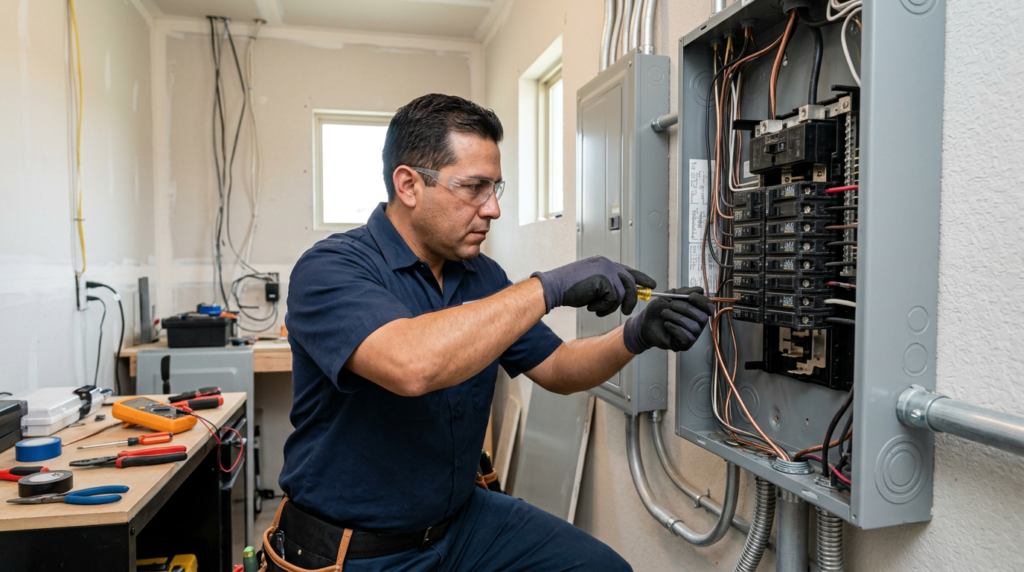
Quick answer: Homeowners in Bulverde typically call an electrician for panel and breaker issues, adding circuits for new appliances, troubleshooting flickering lights or dead outlets, installing EV chargers, upgrading lighting, and bringing older wiring up to current safety standards. You’ll usually get a site inspection, a clear scope of work, and any required permitting for major changes like panel upgrades or new dedicated circuits.
Common Jobs An Electrician Handles Around The House
Most residential calls are about safety, capacity, or reliability. A lot of people start with symptoms: breakers that trip repeatedly, outlets that stop working, lights that flicker when the AC kicks on, or a burning smell near a switch. Those can point to loose connections, overloaded circuits, failing breakers, or damaged devices—issues that shouldn’t be ignored because heat and arcing can build up behind the wall.
Beyond troubleshooting, many projects are straightforward upgrades: adding a dedicated circuit for a microwave, freezer, or workshop tools; installing ceiling fans; swapping old fixtures for recessed lighting; or adding exterior lighting for driveways and patios. If you’re comparing options for electrical services bulverde tx, ask whether the work includes load calculations, proper grounding and bonding checks, and labeling the panel so future troubleshooting is easier.
Newer needs are showing up more often too. EV chargers, smart switches, and whole-home surge protection all require the right wiring method and panel capacity. A typical Level 2 EV charger may need a dedicated 240V circuit, and the electrician should confirm your service size and available breaker spaces before anything gets installed.
Signs You Should Call Soon (Not Later)
Some electrical problems are inconvenient; others are urgent. Call promptly if you notice warm outlets or switch plates, buzzing from a panel, scorch marks, repeated breaker trips, or lights that dim noticeably when a major appliance starts. Those symptoms can mean a loose termination, a failing breaker, or a circuit that’s being asked to carry more load than it was designed for.
Also watch for “half-dead” rooms where some outlets work and others don’t, or GFCI outlets that won’t reset. A tripped GFCI can be simple, but a GFCI that won’t reset may indicate moisture intrusion, a damaged device, or a downstream fault that needs testing. If you’ve had rodents in an attic or garage, damaged insulation and chewed conductors are another reason to schedule an inspection.
What To Expect During An Estimate And Repair
A solid visit usually starts with questions about what you’re seeing, then testing: checking voltage, verifying grounding, inspecting the panel, and tracing the circuit if needed. For additions like a new circuit or EV charger, the electrician should look at service capacity, panel condition, available spaces, and the route for the cable run. If the panel is crowded, solutions might include a subpanel, tandem breakers where allowed, or a service/panel upgrade depending on the situation.
Permits and inspections are common for bigger changes—panel replacements, new service equipment, or significant new circuits. Ask how the area will be protected (drop cloths, attic access, drywall openings) and what the finish plan is if a wall needs to be opened. A clear scope should spell out exactly what’s being installed (breaker type, wire size, receptacle rating, GFCI/AFCI protection where required) so you can compare quotes apples-to-apples.
If you want a local pro to diagnose an issue or plan an upgrade, Bolt Electric is a practical place to start.