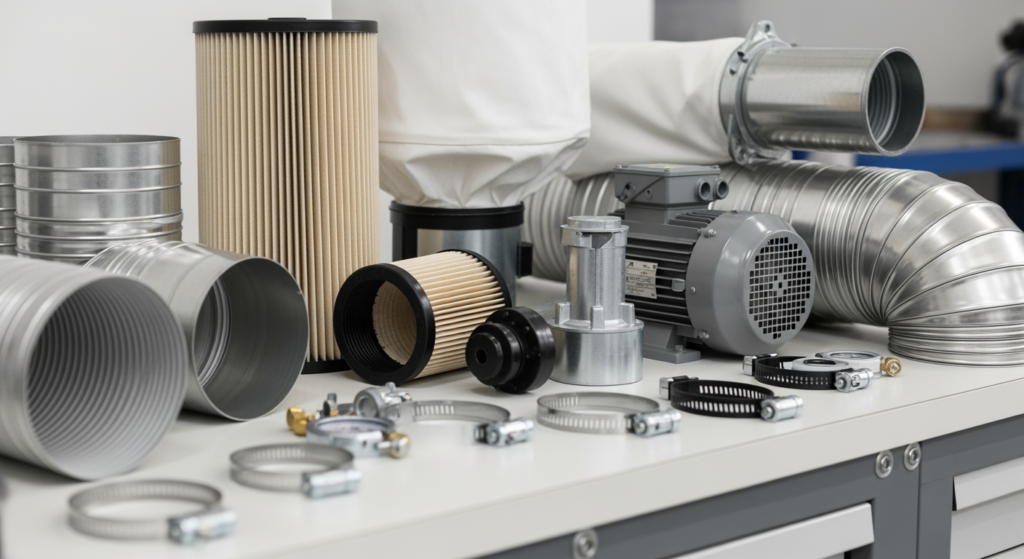
I always tell shop owners and facility managers that understanding dust collector parts is the fastest way to stop downtime and cut operating costs. When it comes to safety and compliance, basic knowledge pays off—OSHA sets standards for airborne contaminants and workplace safety that affect how you maintain and upgrade collectors, and those rules are worth keeping top of mind for your team and equipment OSHA.
Why the Right Parts Matter More Than You Think
Dust collectors are more than a single machine. They’re systems built from many moving and replaceable parts that all influence performance. A worn filter or failing fan blade will drop collection efficiency, increase energy use, and raise the risk of combustible dust incidents. I’ve seen shops delay a simple replacement and end up facing longer outages, higher labor costs, and potential regulatory headaches. Choosing the right part up front avoids that spiral.
Key Dust Collector Parts and What They Do
Knowing the names and roles of common parts helps you diagnose problems faster and gives you confidence when buying replacements. Below I break down core components, why they fail, and what to watch for when they do.
Filter Elements
Filters are the heart of any collector. They come as bags, cartridges, or pleated media. Popular media types include cellulose, synthetic fibers, and PTFE-coated fabrics that resist moisture and sticky dust. Look for changes in pressure drop, visible dust loading on the housing, or unusual odors as signs a filter needs attention.
Fans and Motors
Fans create the airflow that moves dust through the system. Motors drive those fans, and both need correct alignment and lubrication. Vibration, increased amps, or unusual noise are early signs of wear. A simple motor bearing replacement can restore performance without replacing the entire blower.
Pulse Jet Valves and Controllers
Pulse systems keep filter media clean on many cartridge and bag units. Valves, diaphragms, and the controller dictate the timing and force of cleaning. If cleaning cycles are inconsistent, you’ll see steady increases in pressure drop and reduced collection efficiency.
Ductwork and Seals
Leaks in ducts, damaged gaskets, or loose flanges reduce system suction and allow fugitive dust into the shop. Tight seals and periodic duct inspections are inexpensive fixes that deliver quick gains in capture efficiency.
Housings, Doors, and Access Panels
Structural integrity matters for both safety and performance. Corroded housings or warped doors can change airflow patterns and create leak paths. Regular inspections prevent small issues from growing into big repairs.
Troubleshooting and Maintenance Checklist
When a dust system underperforms, a methodical approach finds the root cause and prevents repeat problems. I suggest a monthly quick check and a deeper quarterly review. Here’s a simple checklist to get you started.
- Inspect filter media for tears, blinding, or uneven dust cake. Replace suspect elements immediately.
- Measure static pressure across the filters and compare it to baseline values to spot rising resistance early.
- Listen for unusual vibrations or motor hums and check belt tension on fan drives.
- Walk ducts and joints, feeling for leaks and checking for sagged sections or buildup.
How to Choose Replacement Parts
Choosing parts is often a trade-off between cost, longevity, and fit. I recommend following these guidelines to make better choices and avoid returns or mismatches.
First, match part geometry and material to the application. Abrasive or high-temperature dust needs different filter media and seals than light wood dust. Second, don’t ignore micron ratings and filter efficiency numbers—higher efficiency filters capture more fine dust but can increase pressure drop, so pair them with an appropriate fan to maintain airflow. Third, decide between OEM and aftermarket parts. OEM parts match original specifications exactly, while reputable aftermarket suppliers may offer cost savings or improved materials. Always confirm warranties and ask for test data if you’re moving to a new media type.
Local Considerations that Affect Parts and Performance
Local climate and the type of work in your neighborhood influence which parts wear fastest. High humidity regions cause some filter media and gaskets to degrade faster, and coastal areas can accelerate corrosion on housings and fasteners. In busy industrial districts where metalworking dominates, abrasive particles will shorten fan life and wear liners faster. I recommend tailoring your spare parts inventory to the common contaminants in the area and scheduling seasonal inspections when humidity or temperature swings are most likely to stress components.
Trending Topics in Dust Collection Technology
A couple of trends are reshaping how shops manage particulate control, and they’re worth knowing about when you shop for parts or plan upgrades.
First, predictive maintenance driven by IoT sensors is becoming mainstream. Smart pressure sensors, vibration monitors, and filter differential monitors can feed alerts to a dashboard so you replace parts at the ideal time instead of on a calendar. Second, energy efficiency upgrades—such as variable frequency drives on fans and improved filter media—are getting attention because they reduce runtime costs and lower the system’s carbon footprint. Both trends can be phased in, starting with a few key sensors or one upgraded fan, and expand as you see payback.
Cost Drivers and How to Reduce Total Cost of Ownership
Parts cost is only part of the expense. Installation labor, downtime, and the frequency of replacement all influence the total cost. Here are practical steps I recommend to lower that total.
- Keep a small stock of commonly replaced items so you avoid emergency orders and shipping premiums.
- Implement a simple condition-based replacement schedule so you replace parts when performance begins to decline rather than on a strict time interval.
- Consider upgrades to longer-life media or motors with higher efficiency ratings to reduce energy use and replacement frequency.
- Train maintenance staff to perform quick diagnostics to catch small issues before they require big repairs.
Questions to Ask Suppliers Before Buying Parts
When sourcing parts, I always ask a supplier a set of focused questions to ensure compatibility and reliability. You can use these to vet vendors and compare quotes fairly.
- Is this an OEM part or an aftermarket equivalent, and what testing supports its performance?
- What are the micron rating and media type for filter elements, and are they suitable for my dust type?
- What are the lead times and shipping options for emergency orders?
- Do you offer warranties and a straightforward return policy for defective parts?
Step-by-Step: Replacing a Filter Element
Replacing a filter is one of the most common maintenance tasks, and doing it correctly keeps your collector running efficiently. Here’s a straightforward sequence that I teach to maintenance teams.
Start by isolating the collector and locking out power to the fan and controls. Allow the system to depressurize and use appropriate PPE for airborne dust. Open the access door and remove the retaining hardware on the old element, taking care to avoid releasing dust into the workspace. Inspect the seating surface and gaskets, clean them if necessary, and install the new element with even torque on fasteners. Reconnect any pulse hoses, close access panels, and perform a functional test, monitoring pressure drop and looking for leaks. Finally, log the replacement date and any observations so future maintenance is easier.
Safety and Compliance Tips
Safety is non-negotiable. Depending on the dust type, you may face combustible dust regulations and exposure limits that require specific filters, grounding, bonding, and explosion relief measures. Keep records of filter certifications, maintenance logs, and test data. If your operation processes combustible materials, consider consulting a specialist to confirm that your collector parts and installation meet applicable safety standards. Documented procedures and a culture of regular inspection reduce risk and demonstrate compliance if regulators ever review your facility.
Final Thoughts and Next Steps
If you’re managing a shop or facility, having a clear plan for parts selection, preventative maintenance, and gradual upgrades saves time and money. Start by auditing the system, stocking a few critical spares, and setting up a simple monitoring routine. As you become comfortable, add sensors or efficiency upgrades that deliver measurable, long-term savings. When you need help sourcing the right parts or planning an upgrade, a local industrial supplier can provide parts that match your equipment and help schedule field service.
When you’re ready to move forward, I recommend contacting Faulkner Industrial for parts, service, and system assessments. Faulkner Industrial works with shops and plants in the city and surrounding neighborhoods to keep dust collectors running safely and efficiently. Reach out to set up a parts audit or get help with an emergency replacement.