I’ve written a lot about home comfort and commercial systems, so I know how confusing it can be to search for reliable HVAC services Sun Prairie Wisconsin when you’re juggling daily life or running a business. Sun Prairie is growing fast—home to more than 30,000 people—and that growth brings more demand for efficient heating, cooling, and refrigeration. For local planning and demographic context, I often check the U.S. Census Bureau homepage to understand how population and housing trends affect energy use and infrastructure across the region, which helps explain why local HVAC needs are changing.
Why local HVAC expertise matters in Sun Prairie
Sun Prairie’s climate swings—from snowy, subzero winters to hot, humid summers—create real pressure on both residential furnaces and commercial HVAC systems. Local contractors who know the city’s typical weather patterns, building types, and common installation constraints deliver systems that last longer and run more efficiently. A well-tuned system reduces emergency breakdowns, lowers monthly bills, and keeps occupants comfortable whether it’s a family home near the river or a storefront near downtown.
Seasonal realities you’ll encounter
Winter workload often focuses on furnaces, boilers, and controls that manage cold-start reliability. Summers produce heavy load on air conditioners and rooftop units that serve commercial spaces. In both seasons, indoor air quality and humidity control become high priorities—especially in older buildings that weren’t designed for modern ventilation standards. Choosing a provider who understands local freeze-thaw cycles and municipal code requirements is a practical way to avoid surprise repairs and costly replacements.
Key services to expect from a quality HVAC provider
Whether you’re a homeowner or manage a business in this area, the best local HVAC pros offer a full suite of services rather than a single fix. Here’s what to expect from a qualified contractor who can support your property year-round.
Core service areas
- Installation of furnaces, heat pumps, air conditioners, and packaged rooftop units sized for local homes and businesses.
- Routine maintenance plans that include seasonal tune-ups, filter changes, and system diagnostics to prevent breakdowns.
- Commercial refrigeration service for restaurants, grocery stores, and food distribution — including troubleshooting, refrigerant management, and walk-in cooler repairs.
- Indoor air quality upgrades like UV lights, air cleaners, and ventilation improvements to reduce allergens, odors, and airborne contaminants.
Why refrigeration service is different and why it matters
Commercial refrigeration isn’t just a smaller version of your home AC. It’s a precision system that protects inventory, meets health standards, and affects a business’s bottom line every hour it runs. In this area, quick diagnostics, proper refrigerant handling, and preventive maintenance stop costly food loss and keep regulatory inspections smooth. Local technicians who understand commercial loads, condenser placement, and walk-in cooler dynamics save businesses money and headaches.
Current trends shaping HVAC decisions
The HVAC industry is moving fast, and a few trends are worth watching closely when you decide on upgrades or new installations in the city and surrounding neighborhoods.
Heat pumps and electrification
High-efficiency heat pumps are increasingly popular here because they provide both heating and cooling and can drastically reduce fossil fuel dependence for many homes. As incentives and utility rebates expand, more property owners are switching from aging furnaces to modern heat pump systems that perform well even in cold climates when sized and installed properly.
Refrigerant changes and regulatory updates
New refrigerant rules are pushing the industry toward low-global-warming-potential alternatives. If you manage commercial refrigeration, this is a critical trend: technicians who stay current on refrigerant transitions can help you navigate retrofits, compliance, and long-term cost savings.
Smart controls and energy monitoring
Smart thermostats and building automation systems let you track energy use and adjust settings remotely. For businesses, real-time dashboards and alerts reduce waste and improve comfort for employees and customers. For homeowners, zoning and learning thermostats can cut energy bills while keeping the house comfortable.
How to choose the right HVAC partner in the area
Picking a contractor is about technical skill, local knowledge, and communication. I recommend vetting providers on these practical criteria before making a commitment.
Checklist for selecting a contractor
- Verify the contractor holds current licenses and insurance for the state and local work they perform.
- Ask about experience with the specific equipment you own or plan to buy, especially heat pumps and commercial refrigeration units.
- Look for clear maintenance agreements and documented response times for emergency calls.
- Request references or case examples from similar projects in the area so you can judge workmanship and reliability.
Questions to ask during estimates
During an estimate, I always advise clients to ask how the contractor sizes equipment, whether they will conduct a load calculation for proper sizing, and which efficiency ratings they recommend. Don’t accept vague answers about “right-sized” equipment; good contractors explain their calculations and why a certain system matches the building’s needs.
Maintenance and DIY steps to keep systems healthy
Routine upkeep reduces emergency calls and extends equipment life. You don’t need to be an expert to handle basic tasks, but knowing what to check and when to call a pro will protect your investment.
Simple seasonal maintenance you can do
- Replace or clean filters every 1–3 months depending on usage and filter type. Clean filters improve airflow and efficiency.
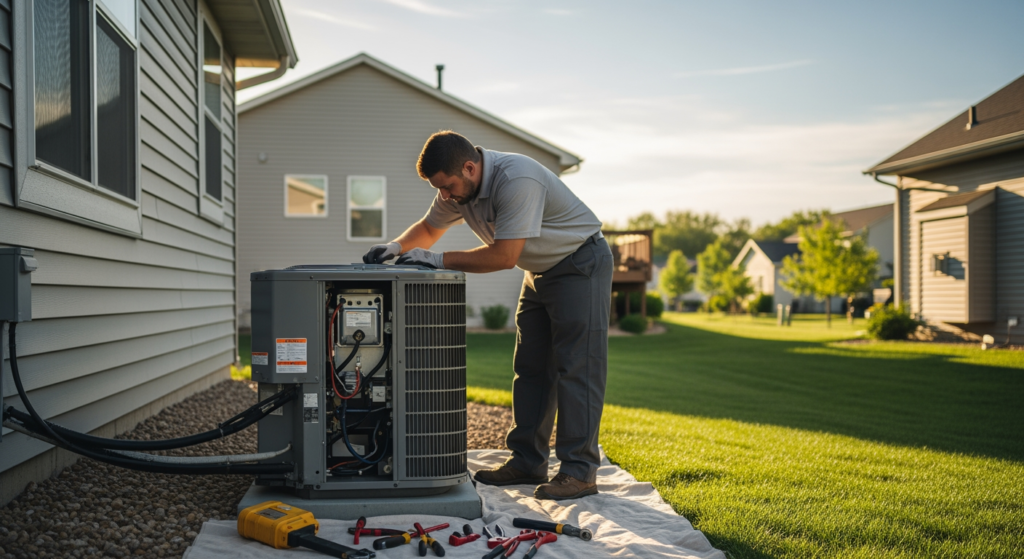
- Keep outdoor units clear of debris, snow, and vegetation to ensure good airflow and avoid compressor strain.
- Test thermostat settings seasonally and consider swapping to a programmable or smart thermostat for better control.
For safety and long-term reliability, leave refrigerant work, electrical repairs, and major condensate or drain-line issues to licensed technicians. Those jobs require specialized tools and training, and improper work can cause equipment failure or safety hazards.
Emergency planning and fast troubleshooting
Breakdowns are stressful, especially during temperature extremes. Having a basic plan and a go-to service provider can shorten downtime and reduce panic.
What to do when your system fails
- Check simple things first: are breakers on, filters clean, and vents open? Often the fix is quick and inexpensive.
- Note any unusual noises, odors, or visible leaks and relay those details to your technician—clear descriptions speed diagnosis.
- Keep a maintenance and service log for your equipment so technicians can see past work and warranties quickly.
For businesses that rely on refrigeration, a service partner who offers prioritized emergency response and emergency refrigeration options (like temporary coolers) is invaluable. Minimizing food spoilage or product loss is an immediate financial protection.
Troubleshooting common HVAC problems and professional fixes
Knowing common failure modes helps you ask smarter questions and recognize when it’s time to call a pro. Here are typical issues and how seasoned technicians address them.
Frequent residential issues
Short cycling, uneven heating or cooling, and persistent humidity problems are common in the area’s older homes. Technicians investigate airflow, duct leaks, thermostat placement, and insulation before recommending major equipment changes. Often, duct sealing, thermostat upgrades, or a targeted repair restores balance without a full system replacement.
Commercial problems and refrigeration faults
For businesses, compressor failures, condenser coil issues, and refrigerant leaks are typical causes of outages. A qualified refrigeration tech will first isolate the electrical components, test system pressures, and inspect compressors and condensers for debris or mechanical wear. Proper diagnosis prevents unnecessary component swaps and targets the real root cause.
Cost considerations and financing options
Replacing or upgrading HVAC can be a significant expense, but many local firms offer financing, seasonal promotions, and guidance on utility rebates and tax incentives. When comparing quotes, look at the lifetime operating cost—not just the upfront price. Higher-efficiency equipment often pays back over time through lower utility bills, especially with Wisconsin’s seasonal extremes.
Local considerations and neighborhood tips
Sun Prairie’s growth pattern means some neighborhoods have older housing stock and different insulation or ductwork considerations than newer developments out near the city limits. If you live close to Madison or commute through nearby corridors, coordinate upgrades with planned insulation or window work to maximize efficiency gains. Contractors who have worked across the city’s neighborhoods are better positioned to recommend practical, cost-effective improvements tailored to local building styles.
Wrapping up with smart next steps
Start by documenting your system’s age, manufacturer, and any recent repairs. Use that information when you contact a local provider for an on-site assessment. Ask for written estimates that include efficiency ratings, expected energy savings, and a maintenance schedule. For businesses, prioritize providers who understand refrigeration compliance and offer emergency response plans.
If you’re ready to move forward or need emergency attention in Sun Prairie, I recommend reaching out to a trusted local commercial and residential HVAC specialist. For dependable service, clear communication, and local knowledge, consider contacting Nextech—they can assess your site, explain options, and provide the rapid response this area sometimes requires.