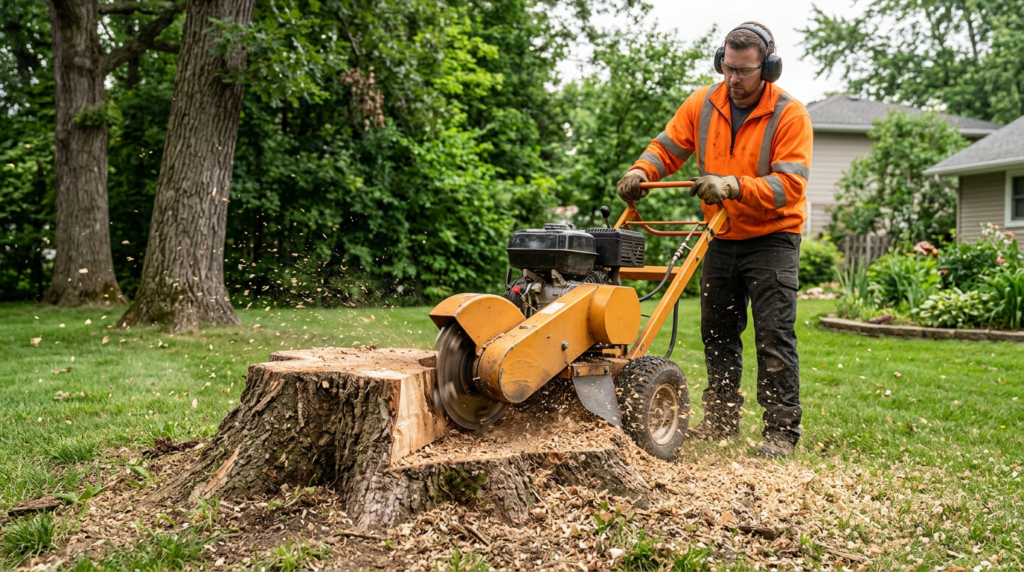
Quick answer: If you want to reclaim the space, avoid tripping hazards, and stop new shoots or pest activity around the old base, stump grinding is usually the right next step after tree removal. A grinder chews the stump down below grade so you can add soil and replant or seed. It won’t remove every root, but it prevents many surface problems and makes mowing easier.
What Stump Grinding Actually Does
Quick decision matrix: Grind if you need a mowable surface, the stump is near walkways/driveways, or you’re dealing with a species known for sending up suckers. Skip if it’s out of the way and you don’t mind natural decay. Full removal if you’re planning a patio/concrete, need to replant a new tree in the exact same spot, or must dig for posts/footings where the stump sits.
Stump grinding uses a rotating cutting wheel to shred the stump into wood chips, often 4–8 inches below the surrounding soil line (depth varies by goal, stump size, and access). The goal is practical: remove the visible stump and the flare at ground level so the area can be leveled and used again.
If you’re comparing options, a stump grinding service is different from full stump removal with excavation. Grinding is usually less disruptive to the yard because it doesn’t require pulling the root ball out of the ground. You’ll still have roots in the soil, but they generally decay over time and may not cause surface obstacles.
Expect a pile of chips mixed with soil after the work. Many homeowners use some chips as mulch elsewhere and remove the rest so the spot can be topped off with clean soil for grass or planting.
When Grinding Is the Better Choice
Grinding is a good fit when you want a smooth lawn, need to eliminate a tripping hazard, or plan to landscape over the area. It also helps if the stump is close to a walkway, driveway edge, play area, or anywhere a mower blade might catch.
It can also reduce nuisance regrowth. Some species sprout vigorously from a cut stump; grinding removes much of the stump tissue that tends to fuel those shoots. It won’t “kill” every root in the ground, but it often reduces repeated sprouts that pop up around the stump itself.
Another common reason is pest and decay management. Old stumps can attract insects and fungi as they break down. Grinding removes the bulk of the decaying wood above ground, which can make the area less inviting for unwanted activity near the house.
Situations Where You Might Skip It (or Choose Full Removal)
You might skip grinding if the stump is deep in the woods, far from foot traffic, and you don’t mind it slowly decomposing. Some people leave stumps intentionally as rustic seats or wildlife features, as long as they’re not in a place where someone could trip.
Full removal (digging out the stump and major roots) makes more sense if you need to pour concrete, install a fence post exactly where the stump sits, or replant a new tree in the same spot. Grinding leaves roots that can interfere with digging later, and the ground above a decaying root system can settle over time.
If you plan to plant grass right away, avoid using only fresh wood chips to fill the hole. Chips can temporarily tie up nitrogen as they break down. A common approach is to remove most chips, then backfill with topsoil and seed or sod.
Common Post-Grind Outcomes and Aftercare
Some settling is normal after grinding because buried wood and fine chips continue to break down. Over the next several weeks or months, the spot may dip slightly, especially after heavy rain, so plan to top-dress with soil once or twice until it stays level.
For lawn repair, many homeowners rake out excess chips, add a layer of topsoil, then seed. Timing depends on your grass type and season; in general, seeding succeeds best when temperatures are mild and the area can be kept evenly moist. If you’re sodding, a firmer, chip-free soil base helps prevent soft spots.
Watch for new shoots around the perimeter. If they appear, simple repeated trimming usually weakens them over time; persistent regrowth can be a sign you’re dealing with a strong-suckering species and may need a different plan for that area.
How to Prepare and What to Ask Before Scheduling
Before the crew arrives, clear the area of rocks, metal edging, toys, and anything the grinder could strike. Mark sprinkler heads, landscape lighting wires, and shallow irrigation lines if you know where they run. If you’re unsure, arrange utility locating and point out any private lines that might not be included in a standard locate.
Next-step checklist (ask any contractor): What depth below grade will you grind to for my intended use? Will you haul away chips or leave them, and how much cleanup is included? What access width does your machine need, and will it cross soft turf? How will you protect irrigation heads, drains, and shallow lines? What’s your restoration plan afterward (topsoil backfill, leveling, and whether I should wait before reseeding or sodding)?
White Oak Tree Company is one local option if you want help planning the grind depth, cleanup, and restoration steps for your yard.