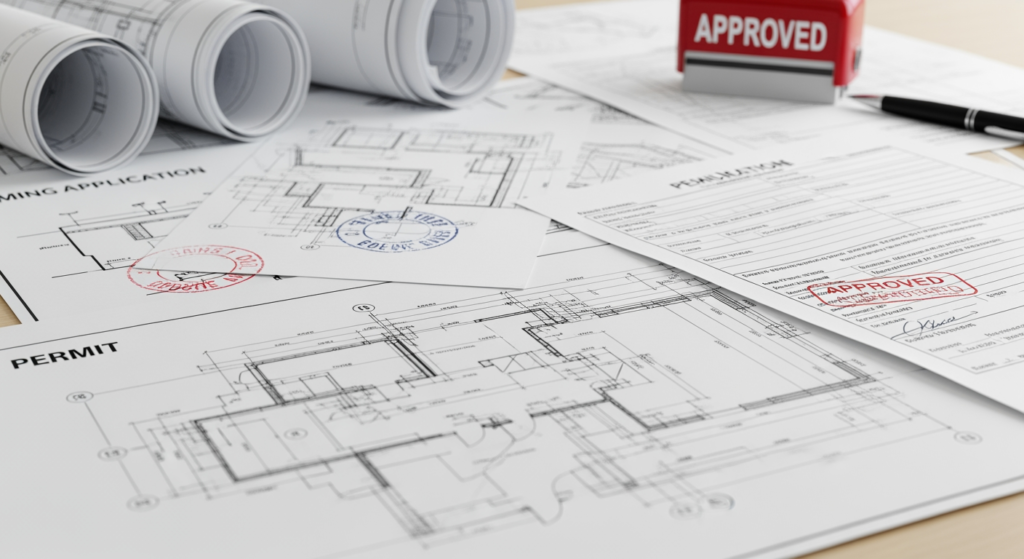
I’ve helped project teams navigate the tricky world of civil engineering permitting services for years, and I know what slows projects down: unclear requirements, missed deadlines, and surprise agency comments. With many municipalities growing quickly — recent data from the U.S. Census Bureau points to steady regional population shifts — local permitting departments are busier than ever, which makes having a clear permitting strategy essential. United States Census Bureau
What civil engineering permitting services cover
Civil engineering permitting services are the planning, documentation, and coordination efforts that help a project win approvals from public agencies. They span a wide range of needs, from initial feasibility checks to final sign-offs. I break services down into practical categories so teams know exactly what to expect and when to bring in help.
Typical services include:
- Permit strategy and entitlement planning — identifying which permits the project needs and the order to pursue them.
- Site civil design coordination — making sure grading, stormwater, utilities, and road access meet agency standards.
- Regulatory submittals — assembling permit applications, technical reports, and response memos for review agencies.
- Permit expediting and agency negotiation — communicating with reviewers, attending meetings, and resolving comments quickly.
Why timely permitting matters for the city and your bottom line
Permits are more than paperwork. They set the timeline and cost structure for a project. Delays in approvals can push construction start dates, driving up labor and materials costs and causing schedule ripple effects for owners and contractors. Locally, permitting workload often rises with development pressure in neighborhoods and commercial corridors, so submitting clear, code-compliant plans from day one protects project schedules and budgets.
When I work with clients I focus on preventing the most common time sinks: incomplete applications, ambiguous stormwater calculations, and missing agency coordination for utilities or environmental resources. Addressing these early shrinks review cycles and builds trust with the permitting authority in the city.
Common permitting roadblocks and how I fix them
From my experience, most projects encounter the same handful of obstacles. Knowing these in advance makes them manageable.
Frequent issues include unclear site access, incomplete utility exhibits, and stormwater design that doesn’t match local standards. Here’s how I approach each.
- Unclear access or right-of-way questions: I map access points to the city’s street grid and collect supporting documentation from traffic or transportation reviews early, so reviewers don’t flag access as an unresolved issue.
- Utility conflicts: I coordinate early with water, sewer, electrical, and telecom providers to avoid redesigns after plan check comments.
- Stormwater and drainage: I prepare drainage exhibits and calculations to local standards and include a narrative that ties the technical work to the local code sections reviewers reference most often.
Step-by-step permitting roadmap
Having a clear roadmap organizes effort and keeps every stakeholder aligned. Here’s a streamlined sequence I use for most projects to reduce surprises and speed approvals.
- 1. Pre-application review: Meet with planning and public works early to confirm what they expect. Capture their checklist and specific submittal requirements.
- 2. Technical package prep: Produce civil plans, drainage calculations, grading plans, and any environmental assessments to match local templates.
- 3. Submittal and tracking: File all permit documents together where possible and use a tracking log so we can respond to comments within targeted timeframes.
- 4. Coordinate conditions: If approval comes with conditions, create a clear punch list and assign responsibilities so nothing falls through the cracks.
Trending topics shaping permitting today
Permitting is changing fast. I keep up with trends so my clients avoid surprises and can leverage new tools for faster approvals.
Two trends I watch closely:
1. Digital permitting and e-permitting platforms — Many jurisdictions are moving reviews online. Submitting electronically reduces courier delays and allows reviewers to annotate plans directly. Projects that prepare clear digital plan sets and searchable PDFs get faster reviewer feedback.
2. Climate resilience and stormwater requirements — With more emphasis on resilient design, reviewers are asking for stronger stormwater management, low-impact development features, and designs that account for future rainfall patterns. Integrating green infrastructure — like bioretention and permeable paving — into permit submittals shows reviewers you’ve accounted for long-term impact.
Practical tips to speed permit approvals
Over the years I’ve gathered practical tactics that consistently reduce review time. These aren’t theoretical — they’re actions you can take the next week to streamline permitting.
- Align documents with agency checklists: Use the agency’s checklist as a submission table of contents so reviewers see everything in the expected order.
- Provide a response matrix: When you get comments, deliver a side-by-side matrix that shows each comment, the plan revision location, and the action taken.
- Supply clear contact points: List project contacts for technical disciplines so reviewers can ask focused questions instead of broad, time-consuming ones.
- Bundle related permits when possible: Submitting building, grading, and utility permits in coordinated packages can reduce duplicate review cycles.
How a permitting partner adds measurable value
Bringing a dedicated civil permitting partner onto a project does more than reduce paperwork. It translates into tangible benefits:
First, a partner reduces review cycles. When plans are prepared with a reviewer’s perspective, the first submittal often closes more review comments and shortens the back-and-forth. That means fewer redesigns and fewer consultant hours later.
Second, a partner protects the schedule. I build permit milestones into the overall project timeline and monitor agency progress so that any slowdowns are detected early and addressed proactively. Owners and contractors get better predictability for resource planning.
Third, a partner prevents cost surprises. By identifying potential right-of-way requirements, off-site improvements, or mitigation needs up front, we avoid last-minute change orders that can be costly during construction.
Real-world examples of permit problem-solving
Here are common scenarios I encounter and how I resolve them so projects move forward smoothly:
Scenario: A project receives contradictory comments between planning and public works on driveway slopes and curb returns. That kind of conflict stalls approval if it isn’t resolved quickly.
Fix: I schedule a coordination call with both reviewers, present options supported by quick sketches, and agree on a single path forward. Then I document the agreed resolution in the submittal so reviewers see the consensus and can close that item.
Scenario: A grading plan triggers a stormwater retrofit requirement that wasn’t identified in early scoping.
Fix: I prepare a targeted stormwater addendum with a phased approach that meets immediate permit thresholds while allowing for longer-term mitigation as part of the project’s construction schedule. That approach balanced code compliance and the owner’s cash flow concerns so the permit could issue.
How to budget time and cost for permitting
Estimating permitting effort is often the toughest part of early budgets. My approach is to build a conservative permitting contingency tied to project complexity and agency workload. For small site plans the permitting phase may take a few weeks; for larger developments or projects requiring environmental review the phase can stretch many months.
Practical budgeting steps I recommend:
- Identify all required permits and group them by complexity and likely review time.
- Ask the local planning department about current review timelines — they often publish average times or can tell you the queue length.
- Include contingency for agency conditions and potential technical studies that might be requested during review.
Questions you should ask before hiring a permitting partner
Choosing the right permitting partner matters. Here are straightforward questions I always want my clients to ask so they understand value and fit:
Do they have recent experience with the same permitting jurisdiction? Local knowledge of staff preferences and code interpretations shortens review cycles.
Can they show examples of plans and submittals that cleared review with minimal iterations? Look for examples with documented review histories and response matrices.
How will they handle communication with agencies? Expect a clear plan for meetings, contact points, and escalation procedures if a reviewer raises major concerns.
Final thoughts and next steps
Permitting can feel like a maze, but with a proven roadmap and clear tactics it becomes a manageable project milestone instead of a blocker. Focus on early coordination, clear submittals, and responsive comment handling. Those steps shorten review time, reduce budget surprises, and keep your schedule on track.
If you’re ready to move forward and want hands-on help navigating permit requirements for a site in the city or this region, I recommend a focused pre-application meeting with the local agencies and a permit readiness review that identifies every foreseeable question before the first submittal. That upfront work pays for itself in faster approvals.
H Engineering M is available to discuss civil engineering permitting services tailored to your next project. I’ll help you map the permit path, prepare clear documents, and stay on schedule so your project can start on time and within budget.